Best Root Cause Analysis Books: 23 Expert Picks (2026)
Updated May 3, 2026 · Curated list
The best books on root cause analysis compress years of practitioner experience into a weekend of reading. Below are 23 curated picks covering 5 Whys, Fishbone, Lean, Six Sigma, FMEA, and DevOps — from Ishikawa’s original quality guide to modern reliability classics — each with an honest assessment of who it is best for.
Whether you are starting Lean Six Sigma certification, leading quality improvement, running incident post-mortems, coaching engineers, or building a workshop curriculum — there is a different right book for each context. The 23 picks below are organised across five categories so you can skip directly to the one that fits.
Top 10 picks at a glance
Book
Author
Best for
Pages
The Lean Six Sigma Pocket Toolbook
George et al.
Quick reference to 100+ tools (#1 bestseller in niche)
240
Beyond the Five Whys
James C. Paterson
5 Whys deep-dive with systems thinking lens
272
The Goal
Goldratt & Cox
Constraints theory via business novel (7M+ copies sold)
384
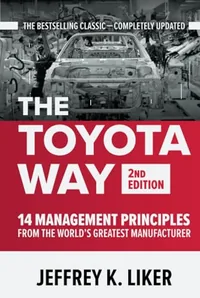
The Toyota Way (2nd Ed.)
Jeffrey K. Liker
Lean management foundations, 14 Toyota principles
448
Toyota Kata
Mike Rother
Continuous improvement as daily routine, not project
336
Agile Retrospectives (2nd Ed.)
Derby, Larsen, Horowitz
5 Whys in software/Agile retrospective context
200
The Phoenix Project
Kim, Behr, Spafford
DevOps/IT business novel, broad appeal
432
Thinking in Systems
Donella Meadows
Systems thinking primer, applies beyond Lean/quality
240
The Checklist Manifesto
Atul Gawande
Mass-market read on procedural safety (medical, aviation)
240
Lean Six Sigma Green Belt Study Guide 2026-27
Miles Jefferson
Active certification candidates (ASQ exam prep)
~350
Below: full reviews of all 23 picks across five categories — Toyota and Lean foundations, Six Sigma and quality management, RCA and problem solving, Agile and DevOps, and broader systems thinking.
Book links point to Amazon as a reference. They are plain links — we are not in the Amazon Associates programme and earn nothing if you buy. The picks are what we would recommend either way.
Our Top 3 Picks
#1 Bestseller
The Lean Six Sigma Pocket Toolbook
Michael L. George et al.
Quick reference to 100+ tools including 5 Whys, Fishbone, DMAIC. The most popular book in the niche.
Most Relevant
Beyond the Five Whys
James C. Paterson
The only book dedicated to extending 5 Whys with systems thinking. Perfect companion to this site.
Most Popular
The Goal
Eliyahu M. Goldratt
7+ million copies sold. The business novel that taught the world about constraints and process thinking.
Toyota & Lean Manufacturing
The roots of the 5 Whys method lie in Toyota’s production system. These books document the management philosophy that made continuous improvement a daily practice rather than an occasional initiative.
1. The Toyota Way (2nd Edition)
Jeffrey K. Liker
★★★★☆3,000+ reviews~$30
The definitive guide to Toyota’s 14 management principles. Liker, a University of Michigan professor, spent decades studying Toyota from the inside. The 2021 second edition adds chapters on innovation and emerging technology. Essential reading for anyone serious about continuous improvement.
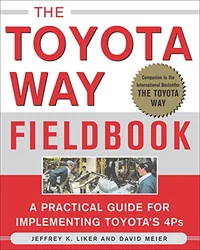
The practical companion to The Toyota Way. Meier, a former Toyota engineer, provides concrete exercises, case studies, and step-by-step implementation guidance. Works best as a set with the main volume.
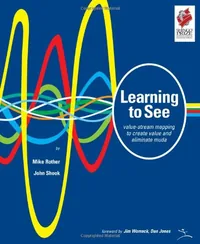
The standard workbook for Value Stream Mapping. Shingo Prize Winner. Used as a training manual in corporations and universities worldwide. The spiral-bound format is designed for workshop use.
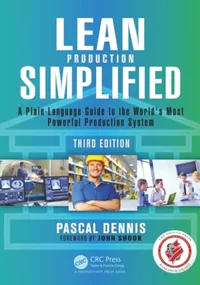
Four-time Shingo Prize winner. The clearest introduction to Lean for managers without a technical background. Widely used in certification programs. Straightforward narrative with plenty of illustrations.
The book that introduced the word “lean” to the business world. Womack and Jones trace five companies through their Lean transformations. A foundational text with enduring relevance.
For teams that want structured, data-driven quality improvement. These books range from pocket references to full certification prep guides.
6. The Lean Six Sigma Pocket Toolbook
Michael L. George et al.
★★★★☆3,000+ reviews~$27#1 Bestseller
Quick-reference guide covering roughly 100 Lean Six Sigma tools, including 5 Whys, Fishbone diagrams, and DMAIC. Used daily by certified Green and Black Belts worldwide. The most practical single volume in the field.
The full methodology without shortcuts. George, founder of George Group Consulting, lays out how to combine Lean speed with Six Sigma rigor. Suited for organizations implementing LSS from the ground up.
Peter S. Pande, Robert P. Neuman, Roland R. Cavanagh
★★★★500+ reviews~$30
Named by TIME as one of the 25 most influential management books. A practical guide aimed at managers, not just engineers. Covers implementation strategy, team dynamics, and executive sponsorship.
9. Lean Six Sigma Green Belt Certification Study Guide 2026–2027
Miles Jefferson
New release, growing fast~$32
The most current prep guide for the ASQ Green Belt certification exam. Certification costs hundreds of dollars, making a focused study guide a smart investment. Updated for 2026 exam content.
Covers Yellow, Green, and Black Belt levels in a single volume. Broad appeal for professionals at any stage of the certification journey. A solid alternative if you want all three levels in one book.
These books address the core skill behind 5 Whys: finding the real reason things go wrong. From dedicated 5 Whys deep-dives to broader problem-solving frameworks.
11. Beyond the Five Whys: Root Cause Analysis and Systems Thinking
James C. Paterson
★★★★4.1/5~$40
The only book dedicated to extending the 5 Whys method with systems thinking. Covers GRC, risk management, quality, compliance, and internal audit perspectives. Published 2023. The most natural companion to the 5 Whys tool on this site.
Rother (author of Learning to See) explains how to make continuous improvement a daily habit rather than a project. Introduces the “improvement kata” and “coaching kata” routines. Highly regarded by Lean practitioners.
The business novel that taught the world about the Theory of Constraints. A manufacturing plant manager discovers how to identify and eliminate bottlenecks. Engaging narrative format makes complex ideas accessible. The gateway to deeper process thinking.
14. Getting to Root Cause through the 5-Why Methodology
Paul Ambruso
★★★★4.2/5~$4 (Kindle)
A focused, affordable e-book on applying the 5 Whys method. Low price point makes it an easy entry point for individuals or teams wanting a quick refresher on the methodology.
For Scrum Masters, product managers, and software engineers. The 5 Whys method is a core tool in Agile retrospectives and blameless incident postmortems.
15. Agile Retrospectives (2nd Edition)
Esther Derby, Diana Larsen, David Horowitz
★★★★★4.7/5~$32
The standard reference for running effective Agile retrospectives. The 2023 second edition adds chapters on psychological safety and remote facilitation. 5 Whys is one of the key techniques covered.
The DevOps novel. An IT manager inherits a failing project and discovers how manufacturing principles (including root cause analysis) apply to software delivery. Widely read in the tech industry.
The science behind DevOps and Lean software development. Forsgren led Google’s DORA Metrics research. Data-driven approach to proving what engineering practices actually improve performance. Popular at top tech companies.
When problems are too complex for a linear causal chain, you need a systems perspective. These books expand your thinking beyond individual root causes.
18. The Checklist Manifesto
Atul Gawande
★★★★☆6,000+ reviews~$15
A surgeon and writer explores how simple checklists prevent failures in medicine, aviation, and construction. The natural next step after a 5 Whys analysis: once you find the root cause, a checklist ensures the fix sticks.
The definitive primer on systems thinking. Meadows explains feedback loops, leverage points, and emergent behavior in clear, accessible language. Essential for understanding why some problems resist simple causal chains.
Rumelt (UCLA) argues that most strategies fail because they skip diagnosis. Sound familiar? The parallel to root cause analysis is direct: good strategy starts with understanding the real problem before proposing solutions.
Books focused on Ishikawa/fishbone diagrams, quality control tools, and visual problem-solving methods.
21. Guide to Quality Control
Kaoru Ishikawa
★★★★☆Classic reference~$35
Written by the inventor of the fishbone diagram himself. Ishikawa covers the seven basic quality tools (including cause-and-effect diagrams, Pareto charts, and control charts) with practical examples from Japanese manufacturing. Essential reading for anyone serious about quality management.
The ASQ reference guide covering over 100 quality tools including fishbone diagrams, 5 Whys, FMEA, Pareto analysis, and dozens more. Each tool has a clear description, when to use it, step-by-step procedure, and examples. The definitive desk reference for quality professionals.
A practical, field-tested guide used by safety and reliability professionals worldwide. Covers fishbone diagrams, fault tree analysis, barrier analysis, change analysis, and the PROACT methodology. Includes blank templates and real investigation case studies from process industries.